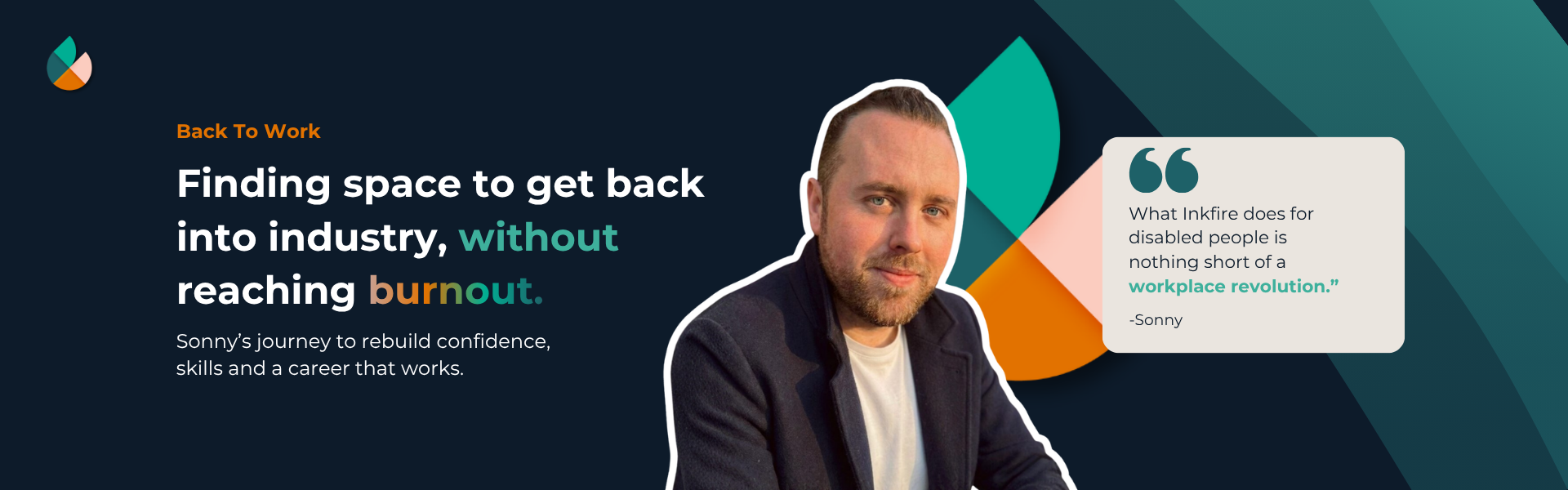
Introducing Sonny
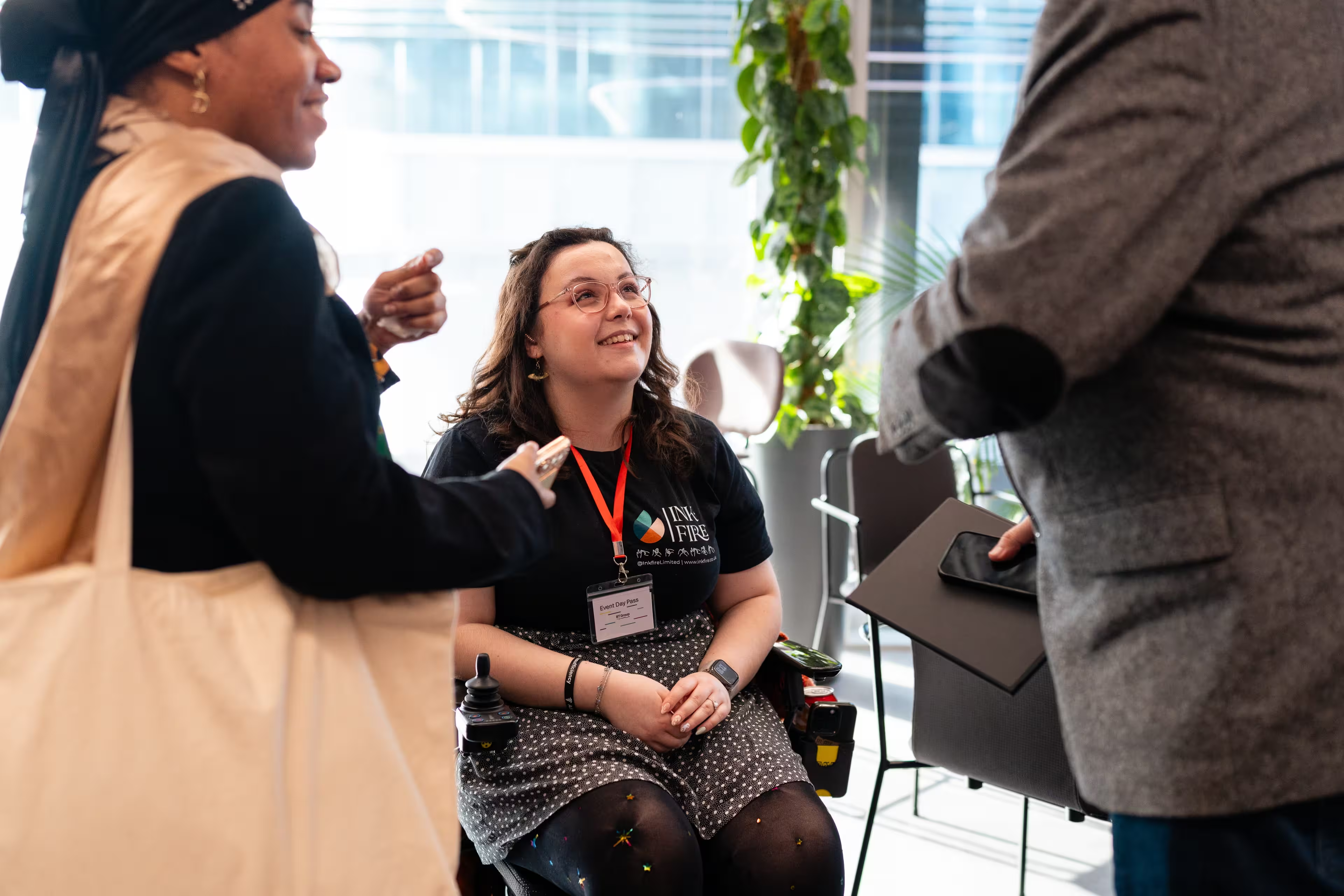
When Sonny joined us at Inkfire, he had been out of paid work for an extended period and felt completely out of the loop with the IT industry. He had held various roles and brought a variety of skill, experience and potential with him. However, he didn’t spend much time in his previous jobs, often due to exhaustion, boredom, or lack of support. Balancing work alongside a plethora of chronic illnesses and neurodiversity had made traditional employment almost impossible to sustain. After years in non-profit, healthcare, and educational settings where his AuDHD and chronic health conditions weren’t properly supported, Sonny experienced severe autistic burnout.
“I’d often be met with eye rolls, patronised, or pushed to the edges of social groups. It would always start well. I’d disclose my disabilities, I’d be told ‘we are inclusive and here to support’, but after a few weeks reality sets in and the reality of workplace inclusivity sets in,” Sonny reflects. “Over time, senior management would gaslight me. I remember struggling with imposter syndrome – that I wasn’t good enough. I’d lose confidence in my abilities – employers not understanding autism, they’d micromanage while simultaneously reducing my responsibilities, missing opportunities to let me strut my skills. Their lack of trust in me made me question everything I did, increasing my stress and anxiety which led to increased sensory overload as a consequence.”
The lack of flexibility in most roles meant that, over time, Sonny’s confidence took a knock and the idea of returning to work began to feel out of reach. After being out of paid employment for almost 10 years, the longer he was away, the less confident he felt. Armed with a varied skillset spanning graphic design, IT systems engineering, and web development, Sonny didn’t lack anything in ability. However, he worried he’d never be able to work again. A normal 9-5 job was too exhausting and frequently resulted in burnout, high anxiety, and pain. The generic working world wasn’t supporting him in the way he needed.
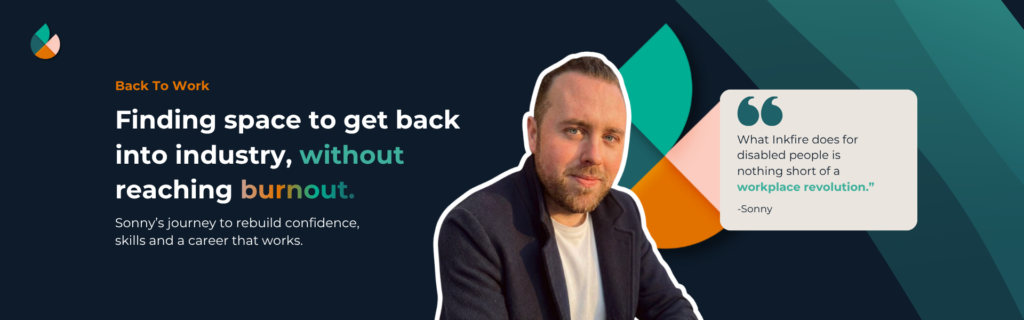
Finding Inkfire
Sonny learnt about Inkfire through a friend’s recommendation. “My first reaction to my friend’s recommendation was here we go again, another ‘inclusive’ company promising support for disabled people. I was extremely sceptical and decided not to get my hopes up, at the same time, semi-curious. I did my research, looked them up, I felt impressed – but in true Sonny tradition, forgot about it for a while. It was only after another prompt from my friend Phil that I got in touch.”
After an initial conversation with our founders, Imali and Cam, it was clear Sonny would be a great fit for the team – very much embodying Inkfire’s ethos and values. He had planned to attempt some form of work later in the year. However, after seeing how much Inkfire had to offer, he agreed there and then to take on a role, despite reservations about his abilities and how it would fit with his complex issues.
As Sonny had experience across three different fields at this point, he wasn’t sure exactly what his dream role would look like, so we made an effort to meet him where he was at. Rather than forcing a specific role to exist on paper, we focused on creating a secure, flexible starting point and allowing things to develop naturally into a position that fitted his needs and interests.
Growing into the role
“It all happened very quickly,” Sonny recalls. “One minute I was sat on my laptop feeling despair at all the things I lacked to qualify for a job on Reed while contemplating the complexities of going self-employed. Overnight I was knee-deep in client websites. I felt like part of the furniture very quickly.”
Once Sonny started working with the Inkfire team, his role evolved quickly, but never with pressure. He worked alongside colleagues on real client projects, which helped him dust off the cobwebs on skills he hadn’t used in a while. He focused on learning new tools and software, contributing ideas, and gradually taking on more responsibility. As his confidence grew, so did his role.
“Apart from a little slip-up on my first day getting a handle on some of the tools, things have gone from strength to strength.” Sonny continues, “I’ve caught back up with my skillset and worked out how to combine all my knowledge in a way that’s helpful and impactful for Inkfire.” Today, Sonny works as our main full stack web developer, leading on all things website development and hosting. He handles projects with care, skill and consistency, and is regularly praised by clients for his calm, thoughtful approach. He is deeply trusted by the team and plays a central role in the work we deliver.
The pace of Sonny’s role has always been intentionally flexible – working around his medical needs, adjusting hours and workload as required. His responsibilities have grown over time, but boundaries and support have remained firmly in place. “What Inkfire does for disabled people is nothing short of a workplace revolution,” Sonny explains. “They not only embraced remote work when everyone else was being forced back to the office, but they took it to another level. Having senior management who genuinely understand health issues was completely new for me – we shared many diagnoses and challenges, and I found it quite amazing how similar we all were.”
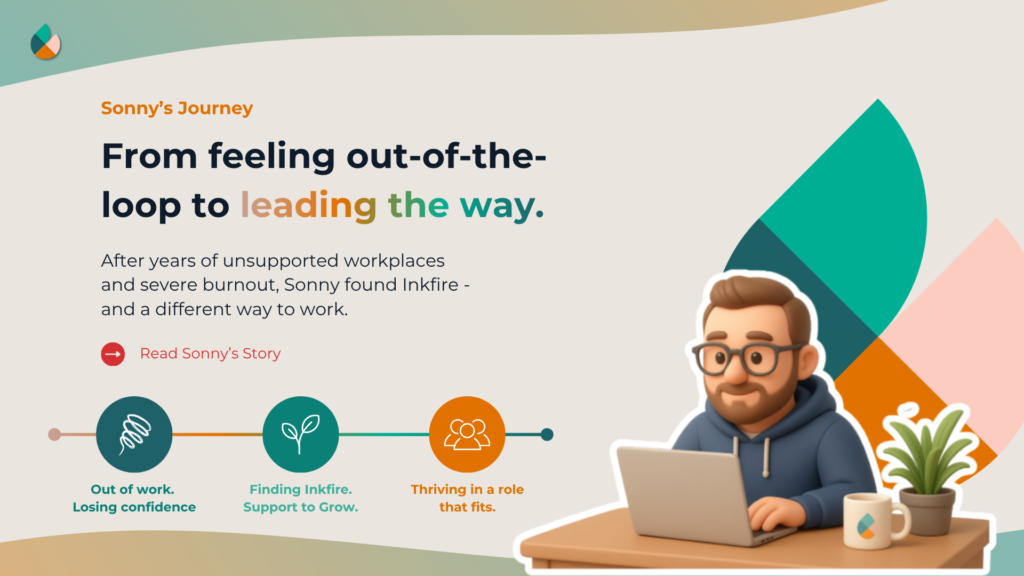
The Back to Work Scheme connection
Sonny’s journey played a key role in shaping what later became Inkfire’s Back to Work Scheme. Before the scheme was formalised, his experience showed us what was possible when people are given time, flexibility, and genuine trust. It demonstrated that supported, realistic routes back into work don’t need to be complex or performative to be effective.
Our Back to Work Scheme was built around these same principles: creating space to rebuild confidence, allowing roles to grow organically, and putting people’s real lives at the centre of how work is structured.
Sonny’s story doesn’t just align with the scheme – it helped define it.
Why this story matters
Sonny’s story shows something a client case study never can – it shows that flexibility works. It reveals that talent appears when barriers are removed, and investing in people, not just outputs, leads to stronger teams and better work.
Working with Inkfire gave Sonny space to breathe and rebuild. Confidence followed, skills deepened, and he grew into a role where he is trusted and valued. He found stability that worked with his health and a team where he truly belongs. The difference wasn’t about changing him; it was about changing the environment around him.
Where is Sonny now?
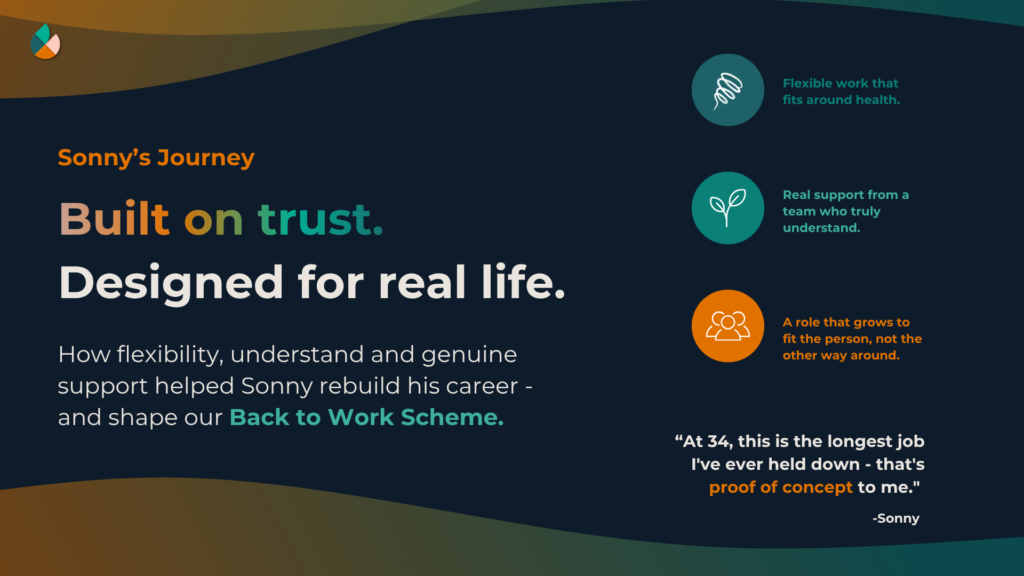
“I’m extremely grateful to Cam and Mali for giving me the space and support to grow and get back on my feet,” Sonny says. “I find it amusing that at 34, this is the longest job I’ve ever held down. That’s proof of concept to me.”
Today, Sonny is a core member of the Inkfire team. He leads on website projects across the brand internally and externally, working closely with clients and colleagues to deliver accessible, high-quality websites that reflect Inkfire’s values. His role continues to evolve in a way that works with his health and capacity, not against it.
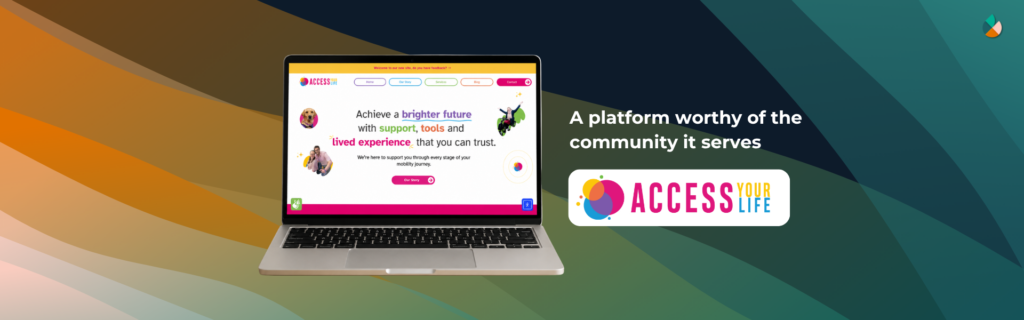
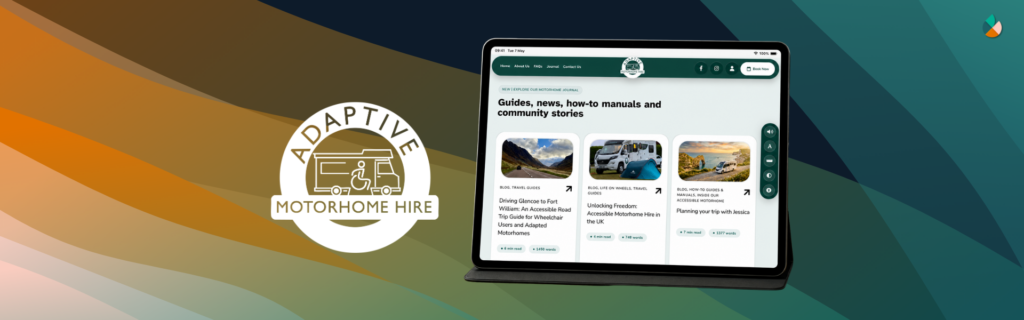
Quite simply, without the expertise Sonny brings to the table, we wouldn’t be the Inkfire we are today. You might have come across Sonny’s work if you’ve visited some of our client websites, such as Reasons to Stay, Access Your Life or Chronically Jenni. He even built Inkfire’s website – the very one you’re using right now!
“What Inkfire does for disabled people is nothing short of a workplace revolution. At 34, this is the longest job I’ve ever held down – that’s proof of concept to me.” – Sonny.